The real Philippines planning tradeoffs
I hovered over my map at 11:47 p.m., toggling between flights into Cebu and Puerto Princesa while a dozen pinned beaches blurred together. A tab with ferry schedules kept timing out, and my “quick” plan started looking like three full travel days. The fantasy was island-hopping; the reality was missed calls when the boat runs late.
The Philippines rewards committing to fewer hubs, but the trade-off is emotional: skipping an iconic stop can feel like doing it “wrong.” If you chase the headline islands at peak times, you buy convenience—more tours, more ATMs, more accommodation choice—along with crowds and prices that creep past a mid-budget target fast. Quieter islands can be cheaper and calmer, yet you pay in friction: slower connections, fewer backup cafés for Wi‑Fi, and power dips that turn a simple Zoom into a gamble.
Timing is the quiet boss of everything. Typhoon risk and sudden squalls don’t just change your beach day; they cancel ferries, ground small planes, and compress your work buffer until you’re taking calls from a lobby with a generator hum. If you need reliable calls, plan like you’ll lose a half-day here and there—then pick two or three places where it’s easy to recover: a base with decent signal, short day trips, and an exit route that isn’t a single weather-dependent boat.
Budget reality: daily costs by style
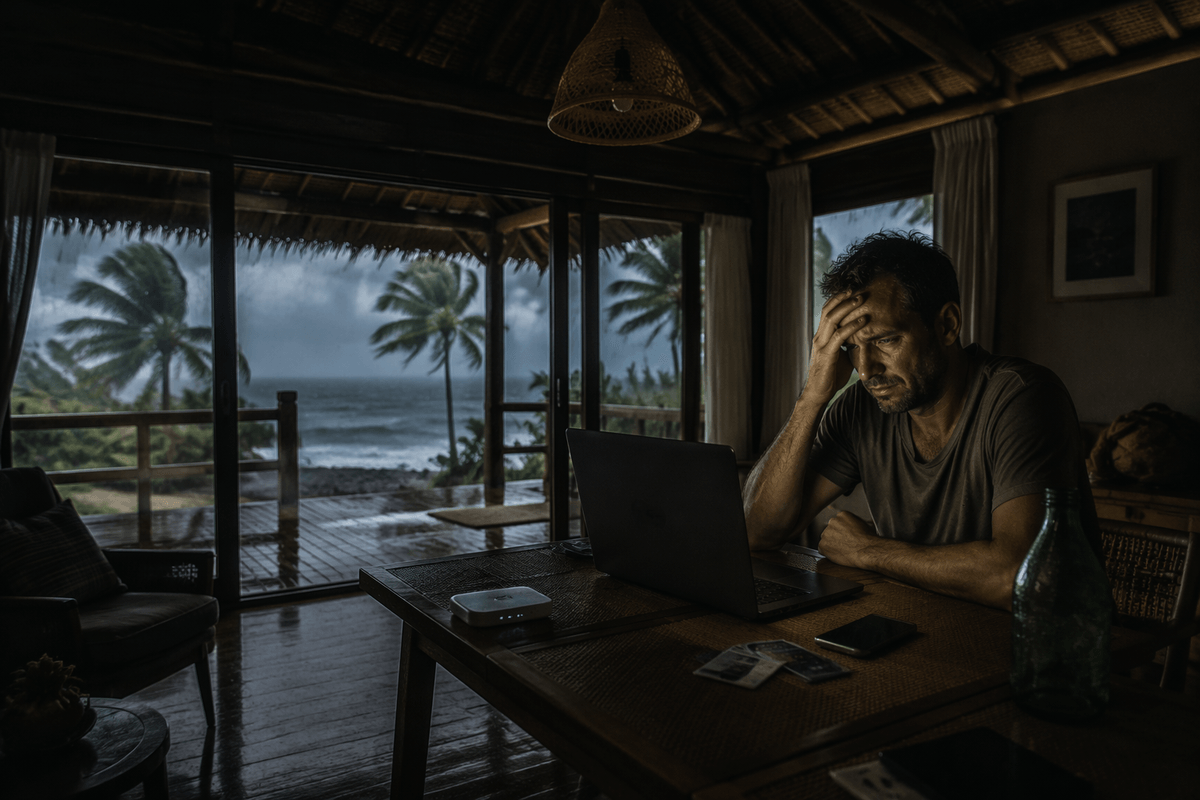
I noticed my “good deal” beachfront room jumped from $54 to $112 the moment I changed the dates by one week, and it wasn’t even high season yet—just a weekend with a local holiday tacked on. That was the first time the budget stopped being a spreadsheet and started being a calendar problem. A mid-budget plan in the Philippines isn’t hard until you try to keep both: a walkable base and internet you’d trust for a call.
At roughly $80–150/day, the biggest swing isn’t food (you can eat well cheaply either way) but what you’re paying to avoid friction. In headline hubs, you buy optionality: rooms with backup generators, cafés that can handle a video call, and tricycles that appear fast—then you watch the bill creep up through “small” fees like transfers, tour markups, and beach-area pricing. In quieter islands, the room rate can be friendlier, but the trade-off shows up as paid mobile data, occasional coworking passes, and the cost of a failed workday when power blips during a stormy afternoon.
Style matters more than people admit. If you’re diving, you can keep a mid-budget ceiling by doing fewer, better days rather than stacking cheap fun-dives that still require boat fees, gear, and tips; a two-dive day can quietly outweigh a nicer room. If you’re remote-working, it often pays to “overbuy” accommodation quality in your work base (stronger signal, quieter setup), then do cheaper beach days elsewhere. The decision cue I wish I’d used earlier: spend on stability on the days you earn, and be price-sensitive on the days you wander.
Choosing islands without losing days
I stared at a 6:10 a.m. ferry time and realized it wasn’t really a “travel morning” so much as a stolen workday with a wet backpack. The route looked tidy on the map—Bohol to Cebu to somewhere “quick” in Palawan—but the fine print was port transfers, waiting for boarding, and arriving just late enough to miss any usable afternoon. The distance between islands isn’t the problem; it’s the number of handoffs.
If you want beaches plus a few dives without living in transit, treat the Philippines like two (maybe three) hubs, not a sampler plate. One hub should be your work anchor: somewhere with multiple cafés, reliable mobile signal, and an airport that runs even when seas get ugly—Cebu City is the obvious mid-budget choice, and it pairs cleanly with nearby dive days (Moalboal) without forcing a hotel change. The second hub is where you accept a little fragility in exchange for “this is why I came” water: El Nido/Coron for drama, or Siargao if you’d rather surf vibes than limestone tours—great for long stays, less great if you need a backup coworking option every afternoon.
Every added island isn’t one more paradise, it’s one more chance for weather, sold-out seats, or slow port queues to eat the buffer you need for calls. If you’re tempted to squeeze in a third stop, make it a short-hop add-on with multiple exits, and only after you’ve banked a calm, connected week somewhere stable.
Weather windows and typhoon backups
I hesitated in front of the forecast at 7:03 a.m., watching the “60% rain” icon flip to “thunderstorms” while my ferry ticket sat in an email folder labeled CONFIRMED. The sky outside my Cebu window looked harmless—bright, a little hazy—yet the wind had that impatient push that makes small boats feel like a bad bet. It was the first time I understood how the Philippines can be sunny and still operationally fragile.
Season advice gets oversimplified into “dry vs wet,” but for a remote worker the real question is what kind of failure you can tolerate. A rainy afternoon in a city base is annoying; the same system on a small island can mean brownouts, weaker LTE, and a canceled departure that traps you through your Monday calls. Shoulder months often price better and feel less crowded than peak dry season, but they demand discipline: keep your work anchor somewhere with multiple networks, backup cafés, and flights that don’t depend on calm seas.
My practical typhoon backup is boring on purpose: build a 24–48 hour buffer before any hard commitment, and don’t stack “must-make” connections back-to-back. If you’re choosing two or three hubs, make at least one an airport city (or near one) so your exit route isn’t a single ferry schedule. When the forecast looks messy, I’d rather trade a planned beach day for a stable desk day—then take the water trips when the windows actually open, instead of forcing them and paying twice.
Internet, SIMs, and remote-work setup
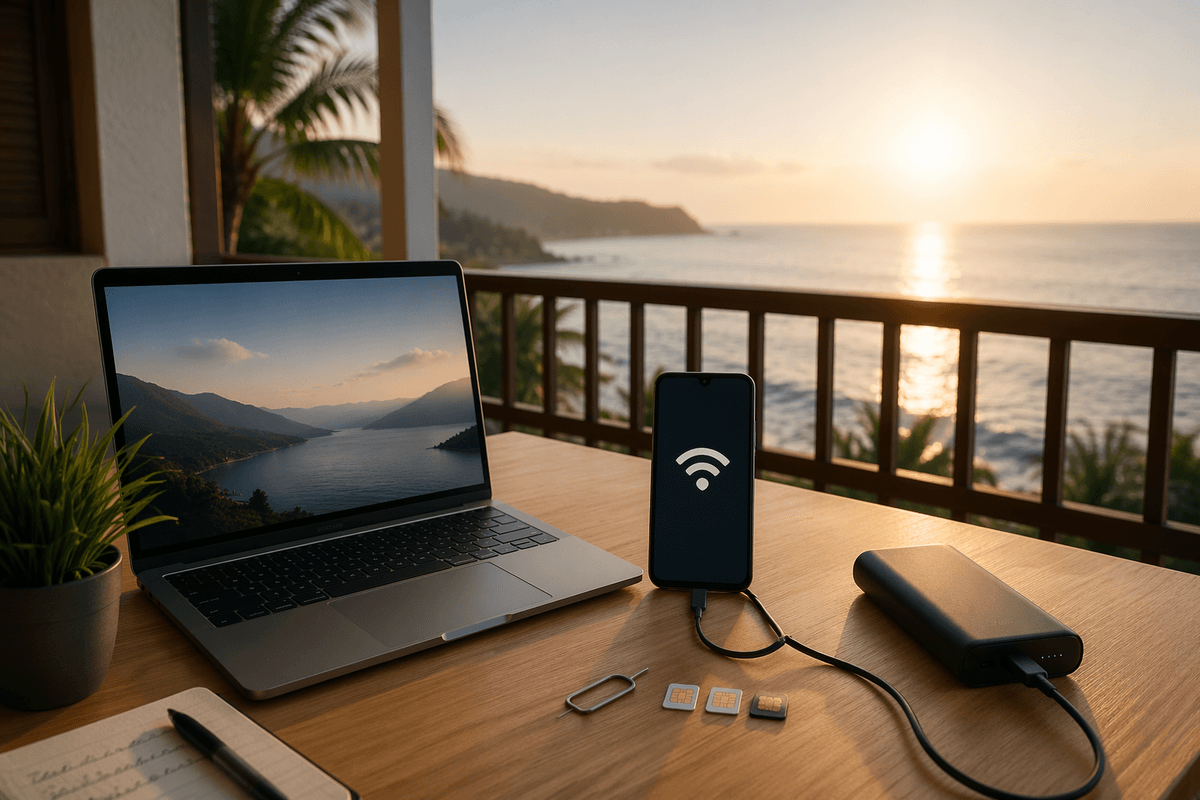
I paused at a 10:58 a.m. “Join meeting” button in Moalboal, phone in one hand, laptop in the other, watching my Wi‑Fi bars bounce like they were deciding my schedule. The café was loud and the outlet was already taken, so I tethered on LTE and hoped the next gust wouldn’t knock the power. It worked—barely—and that “barely” is the whole remote-work game here.
When people say “good Wi‑Fi,” ask where they mean: city apartments and newer hotels can be solid for calls, while beach towns often swing from fine at 7 a.m. to unusable by late afternoon when everyone’s online. Mobile data is your real safety net, but it’s also a trade-off: faster, more reliable coverage in bigger hubs, patchier signal and more dead zones once you’re tucked behind cliffs or palms. I’d plan on carrying two SIM options (typically Smart + Globe) if calls matter; one network can be weirdly strong where the other disappears.
My default setup is simple and a little redundant: a local SIM with a heavy data package, hotspot as Plan B (not Plan A), and accommodation chosen for workdays rather than sunsets—desk, quiet, and a generator if you can afford it. Coworking spaces help in Cebu City and some tourist centers, but on smaller islands the “backup office” is usually a second café plus a charged power bank. If you’re the type who can shift calls earlier, mornings tend to feel like the Philippines on easy mode.
My default two-week first-timer plan
At 6:35 p.m. I almost added “just two nights” in Coron, then noticed it required a morning flight, a van transfer, and a boat time that didn’t like bad wind. My calendar already had three fixed calls that week, and the plan started to feel like gambling with my own workdays. I left it on the maybe list and wrote “buffer” in the margins instead.
For a first two-week loop on an $80–150/day rhythm, I’d default to two hubs plus one short add-on only if the weather behaves. Days 1–5: base in Cebu City for work stability (cafés, SIM coverage, easy airport logistics), with one dive-heavy day trip or overnight to Moalboal when you can afford the early start and the late return. Days 6–12: fly to a “reward” island and stay put—El Nido if you want tours and limestone drama (crowds and prices), or Siargao if you’ll trade some infrastructure for a slower, surf-forward week. Days 13–14: back to Cebu (or Manila if your flight demands it) as a decompression buffer, not a bonus island.
This plan works best if you can front-load your heaviest meeting days in the city week, then let the island week be lighter, with calls pushed to mornings when networks and power tend to behave. If you hate repetition, it may feel under-ambitious; if you hate missed flights, it’s strangely freeing. My decision cue at the end: if you’re still itching to add an island, only do it after you’ve had three consecutive “clean” workdays.