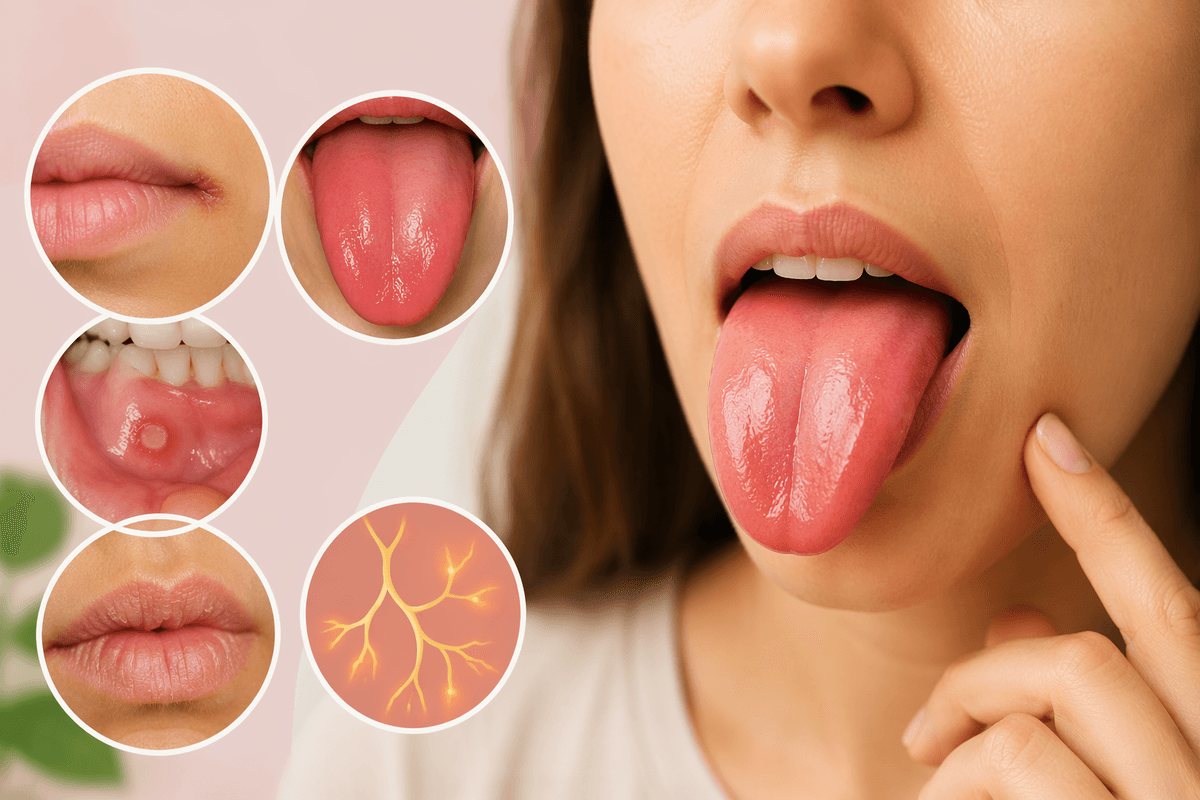
Why low B12 often shows up in the mouth
It can start as a small annoyance you can’t quite place: your tongue feels “off” after brushing, your lips keep catching at the corners, or a patch of your mouth stays tender even when you’ve been drinking water. Because it’s visible and uncomfortable, the mouth is where people often notice changes first—and it’s easy to blame spicy food, dry air, a new toothpaste, or stress.
One reason low vitamin B12 can show up here is that the lining of the mouth renews itself quickly. When B12 stores slowly run down over months or years, that fast turnover may get less support, so tiny irritations can linger longer or come back in cycles instead of settling down. The pattern can feel inconsistent: a few better days, then the same sore spots again.
It also isn’t always about diet alone. Long-term acid blockers, metformin, and aging-related drops in stomach acid can make B12 harder to absorb, even when meals look “normal.” When that’s happening in the background, mouth symptoms may cluster in ways that don’t match the usual explanations.
How B12 shortage alters lining, nerves, and healing
You might notice the irritation doesn’t behave like a one-off scrape. A spot that should calm down in a day or two stays raw, then fades, then returns in the same place—especially after acidic foods, a rough toothbrush pass, or a week of poor sleep. That stop-and-start feel can be confusing, because it looks like “something you ate” when it’s really the tissue struggling to fully reset.
B12 plays a behind-the-scenes role in how quickly mouth lining cells replace themselves and how well they mature. When there isn’t enough available, the surface can become thinner or more easily inflamed, so normal friction from talking, chewing, or dental appliances may feel sharper than it used to. At the same time, B12 supports nerve function, which can shift sensations toward burning, tingling, or a strange “slick” tongue feeling even when the mouth looks mostly normal.
Healing can also get a little less predictable. Small cracks and sore patches may close, but reopen easily—especially if B12 stores have been slowly dropping due to absorption changes, long-term meds, or a narrowed diet.
Tongue redness, swelling, and a “smooth” surface
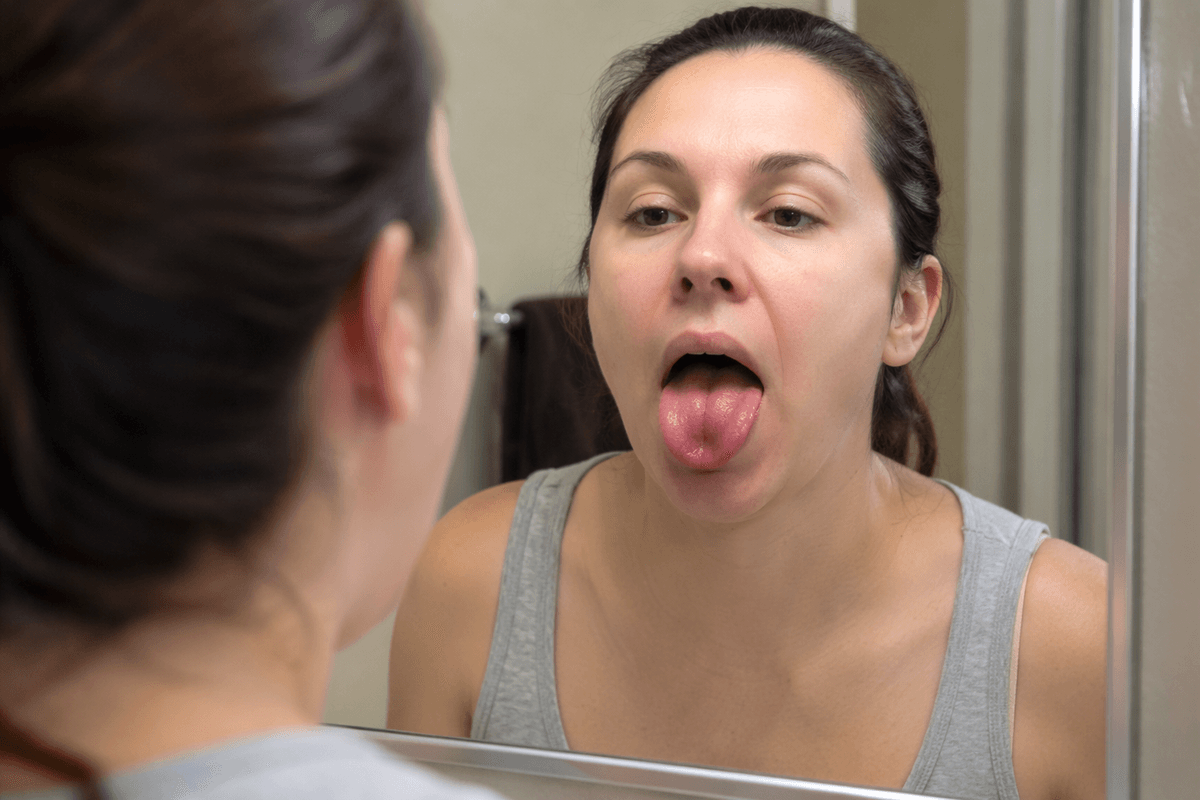
Sometimes it’s not pain at first—it’s the texture. Your tongue can feel oddly slick against your teeth, like the usual “grip” is missing, and you may catch yourself checking in the mirror because it looks brighter or redder than you remember. If it’s swollen, the edges can press into your teeth and leave faint scalloped marks, which can be easy to misread as simple dehydration or “sleeping weird.”
When B12 is running low, the tongue’s surface may lose some of its tiny bumps (papillae) as the lining struggles to renew and mature normally. That can make the tongue look smoother and feel more tender, because there’s less cushion between everyday friction and the sensitive tissue underneath. It may also flare after acidic foods, alcohol, or vigorous brushing—then settle down just enough to seem like it was a one-off.
A red, smooth patch can shift from day to day, and swelling can come and go, especially when the background issue is slow-moving—like long-term acid blockers, metformin, or reduced stomach acid with age—rather than a single obvious trigger.
Cracks at lip corners and persistent chapping
It often shows up when you open your mouth a little wide—laughing, taking a big bite, yawning—and one corner stings like it’s splitting again. You put on balm, it calms down, and then a day later there’s that same tight, paper-cut feeling at the edge of the lips. Because it’s so exposed, it’s easy to chalk up to weather, licking your lips, or a new toothpaste, even when you’ve been careful.
When B12 is low in the background, the skin and lining right at the corners may not “turn over” as smoothly, so a tiny break doesn’t knit together as reliably. That area gets a lot of stress: saliva sits there, the skin folds, and every conversation stretches it. If the surface is already a bit fragile, the crack can close just enough to look improved, then reopen with the next round of friction, spicy food, or dry indoor air.
Persistent chapping plus recurring corner splits can be one of those small signs that fits better when it’s grouped with other mouth changes—like a tender tongue or odd burning—especially if your diet has narrowed or you’ve been on metformin or acid blockers long term.
Mouth ulcers, raw patches, and unusual tenderness
It can feel like you’re suddenly avoiding one side of your mouth without meaning to—because a small spot near the cheek, gumline, or under the tongue lights up when it touches citrus, tomato sauce, or even a minty rinse. The sore may be tiny and hard to see, or it may look like a shallow ulcer with a pale center and a red rim. What stands out is how easily it gets irritated again, even after it seemed to settle.
When B12 is running low in the background, the mouth lining may be a little thinner and less resilient, so everyday friction from chewing, a retainer, or a sharp tooth edge can feel more “injurious” than it used to. Because the tissue is also trying to replace itself quickly, it can end up in a loop: a raw patch partially heals, then reopens with the next round of normal wear. That stop-and-start tenderness can be easy to misread as a single food trigger, when it’s really the surface not fully resetting.
It’s rarely one clean clue. If ulcers or raw patches keep returning alongside corner cracking or a smoother, sensitive tongue—especially after a diet shift, years on acid blockers, or metformin—the cluster can make more sense than any one sore on its own.
Burning, tingling, taste changes, and dryness
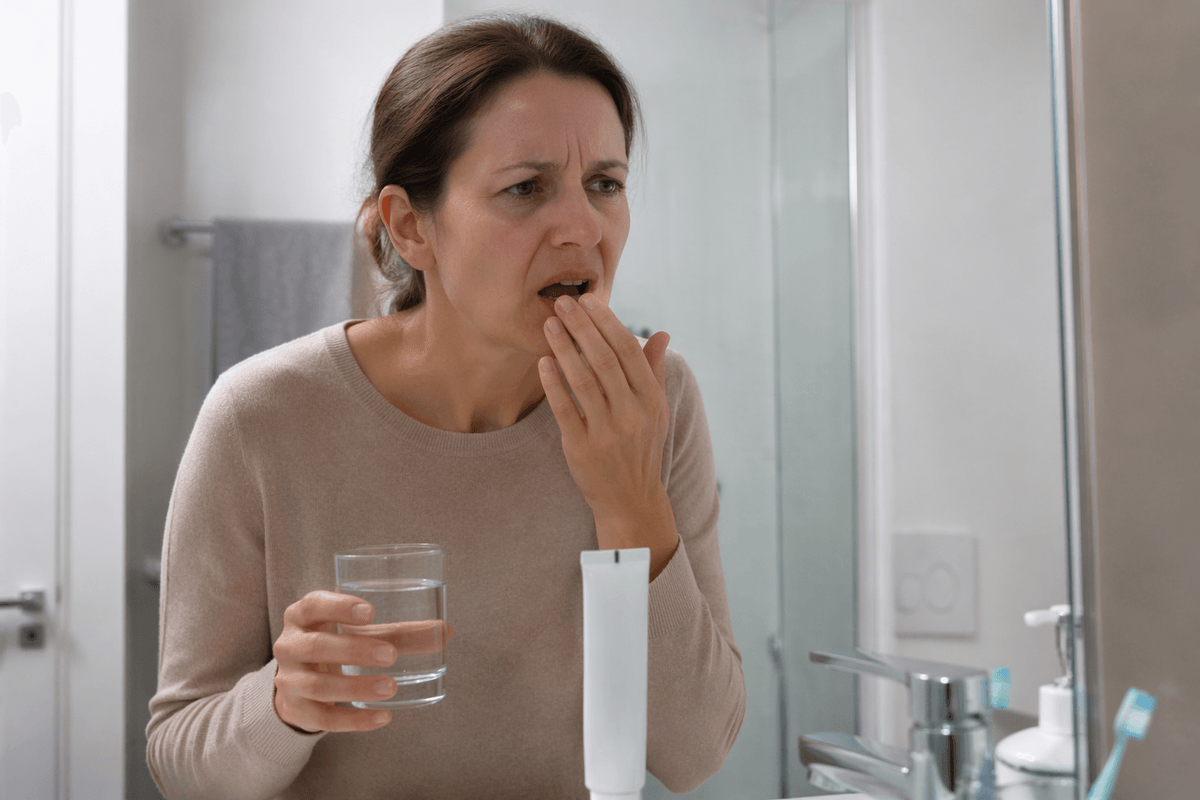
Some days it’s not what you can see—it’s what you feel. Your tongue or the roof of your mouth may start to burn in a way that doesn’t match the food you ate, or you might notice a faint tingling along the tongue edge, like it’s been lightly scalded. You drink water, switch toothpaste, skip spicy meals, and still the sensation drifts in and out, making it hard to pin on one clear cause.
When B12 is running low, nerve support can get a little less steady, and the mouth can become more “reactive” to normal input—heat, acidity, even the friction of speaking. That can show up as burning mouth-type discomfort, weird pins-and-needles feelings, or taste changes where foods seem blunted, metallic, or just “off.” At the same time, if the lining is more irritated and inflamed, saliva may feel less protective, so the mouth feels dry even when you’re drinking normally.
The limitation is how easily this gets misread as dehydration, anxiety, reflux, or a new product. If it keeps recurring alongside smoother tongue patches or corner cracks—especially after a diet narrows, or with long-term metformin or acid blockers—the pattern starts to look less random.
Why these signs are confusing and easily misattributed
It’s easy to get thrown off by how “ordinary” the triggers look. A flare shows up after a week of stress, a few nights of mouth breathing, a new whitening toothpaste, or one salty meal—and it feels logical to blame that one thing. Then you remove the suspected culprit and the soreness still cycles: the corners split again, the tongue stays oddly smooth, or the burning returns on days that don’t make sense.
Part of the confusion is that the mouth is reactive even when nothing serious is happening. Reflux, dry indoor air, yeast overgrowth at the corners, a rough dental edge, dehydration, allergies, and even overbrushing can all mimic pieces of the same picture. When B12 stores are gradually running low, the lining may be easier to irritate and the nerves may be more sensitive, so those everyday factors “count” more than they used to—and the result looks like a string of unrelated problems instead of one pattern.
What often clarifies it is the clustering and the persistence, not any single sign. If the same mix of corner cracking, recurring tender patches, a smooth red tongue, and odd burning keeps resurfacing—especially alongside a narrowed diet, long-term metformin, acid blockers, or digestive changes—it becomes more reasonable to wonder if B12 is part of the background, even when each flare has a different excuse.