The real choice isn’t packing—it’s outsourcing it
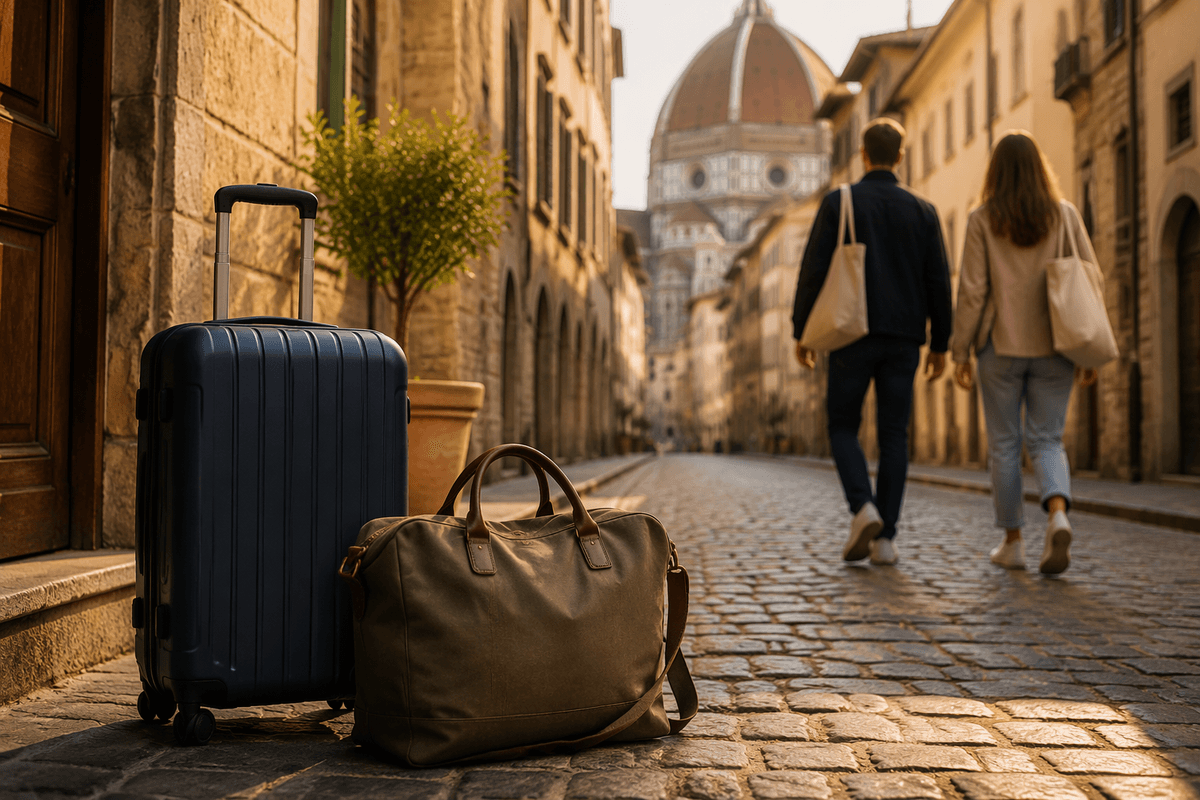
I froze at the foot of the hotel stairs in Florence with a 22-inch roller and a backpack, watching two people glide past me with nothing but tote bags. The concierge said they could “probably” store luggage after checkout, but couldn’t promise space if a tour group arrived early. On my phone, a luggage-forwarding site showed a delivery window that looked neat on a map and fuzzier in real life.
That’s the real decision: not what you can squeeze into a carry-on, but what you’re willing to outsource. Dragging your suitcase through cobblestones is predictable friction—slow, loud, and sweaty, yet fully under your control. Shipping or forwarding trades that certainty for coordination: cutoff times, hotel acceptance, signature rules, and the small but real chance your bag arrives after you do. It works best for travelers who care more about moving fast between cities than having every item within arm’s reach; it’s a poor fit if you change lodging last-minute or land in town late and need your bag immediately.
On a 10-day, 4-city rail trip, the timing is the whole game. Same-day handoff is rare; next-day delivery is common, which can be perfect when you’re doing one “in-between” night, and annoying when you’re only staying one night total. Price feels painful until you compare it to the hour lost hunting elevators, queueing for station storage, or detouring to avoid stairs—then it becomes a question of which hassle you’d rather pay for.
Decide if luggage-free fits your route
I hesitated on the platform at Firenze Santa Maria Novella with eight minutes until departure, staring at a lift icon on my phone that didn’t match the staircase in front of me. The train was easy; the station geometry wasn’t. In that moment, “luggage-free” stopped sounding like a lifestyle choice and started sounding like a routing constraint.
The quickest test is to mark your trip’s “bag-critical” moments: early checkouts, tight rail connections, and any city where your lodging is a 15–20 minute walk over uneven streets. If you’re doing two-night stays with midday arrivals, you can usually tolerate a next-day delivery window because you’ve got slack; if you’re doing one-night hops, that same window becomes a tax on spontaneity. Think of it like trading one long, predictable drag (stairs, cobbles, crowded metro cars) for several small deadlines (handoff by 10:00, reception open until 19:00, no deliveries on Sunday), and decide which failure mode annoys you more.
Coverage matters less than handoff points. Big stations often have lockers or left-luggage, but they can fill up, run on limited hours, or send you through a slow queue right when you want to sprint to a platform. Hotels are usually more reliable than random pickup locations, yet not every place accepts deliveries or stores bags pre-check-in—especially small properties or apartments with no front desk. Luggage-free works best when your overnight stops are stable and your arrival times are civilized; it’s shakier if you improvise lodging late or tend to roll in after dinner.
Pick your approach: ship, store, or forward
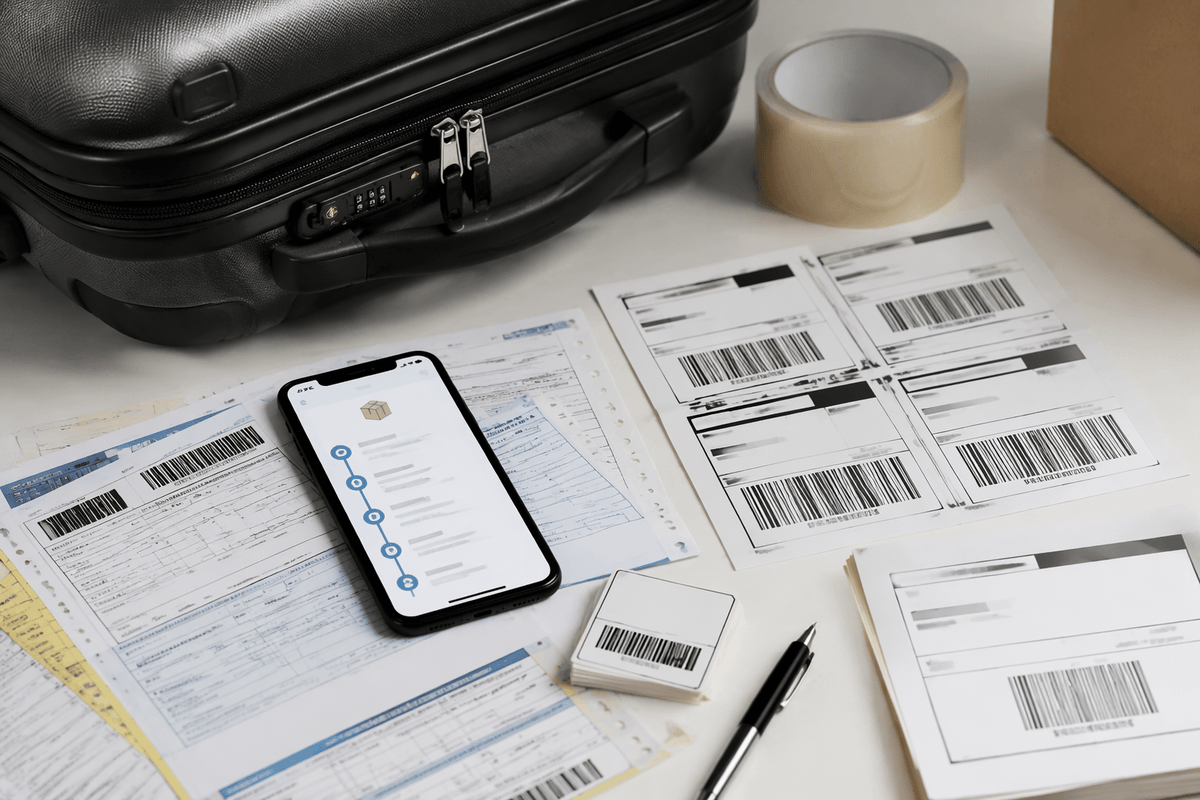
I hit “Reserve pickup” on a luggage-forwarding form in Milan and stalled at the field that asked for an exact reception window. My next hotel’s “front desk” was a keypad and a WhatsApp number, and my train didn’t land until 18:40. Compared with rolling a suitcase myself, the logistics suddenly had sharper edges: who signs, where it waits, and what happens if nobody’s there.
Think of three approaches, each with a different failure mode. Station storage (lockers or left-luggage) is fastest when you’re doing a same-day roam—arrive, dump, explore, grab it before closing—but it’s vulnerable to queues, sold-out lockers, and that annoying detour back across the station when you’re trying to make a platform. Forwarding (hotel-to-hotel or service-to-hotel) buys you the cleanest “walk straight out” feeling, especially if you’re crossing a city with stairs and cobbles, yet it usually wants a stable address and a staffed handoff point. Shipping (courier-style) can be surprisingly flexible for longer gaps, but it’s the most paperwork-ish: labels, tracking, and rules about what can’t go inside.
For a 10-day, 4-city rail loop, I’d use storage on the day you’re arriving and leaving the same day, and forwarding on any hop where you have a two-night cushion. The simple setup is: one “delivery-friendly” lodging per pair of cities, confirm they accept bags before you book, and keep one small “24-hour kit” on you so a late bag is inconvenient, not trip-breaking.
Make it work with smarter packing
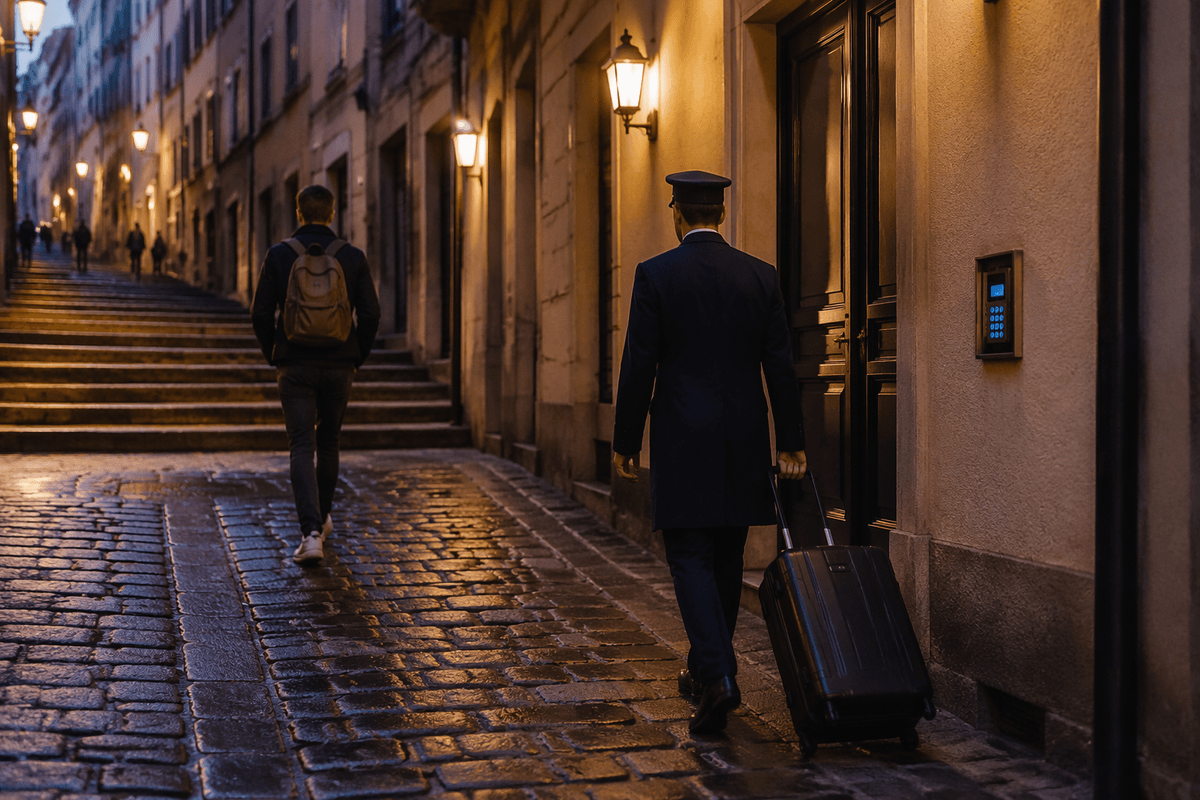
I stood in a narrow Milan hallway at 07:25, weighing my daypack like it was a legal carry-on, because my “big bag” was now a promise instead of an object. The night before, I’d moved half my stuff into a soft tote, then second-guessed every “what if” item while the elevator down to the lobby pinged impatiently. Rolling a suitcase is bulky but honest; forwarding makes you fast, but only if you’re disciplined about what stays with you.
The trick is to pack for two different time horizons: what you need for the next 24 hours, and what can safely disappear for 36. A minimalist “bridge kit” (toiletries, meds, one change of clothes, chargers, and a light layer) works for most rail days, but it breaks down if you’re arriving late, showering at the station, or headed straight to a nicer dinner. I treat shoes and anything fragile as non-forwardable—not because services can’t handle them, but because replacing them mid-trip costs more time than the fee you paid to move the bag.
Then there’s the booking friction you can solve with packing choices. Use a bright strap or tag so your bag is unmistakable in a hotel luggage room, and keep a photo of the bag plus your booking confirmation in the same note on your phone. If your next stop is an apartment-style place, trade one fancy outfit for a “delivery-proof” plan: pack a compressible tote you can carry up four flights if the courier won’t climb stairs. If that sounds annoying, it is—but it’s still less annoying than dragging hard wheels over cobblestones at rush hour.
Where plans fail and what I’d do
I found out my “guaranteed” delivery window was more suggestion than promise when I rolled into Paris at 19:10 and the hotel’s reception sign said it closed at 19:00 sharp. The courier had called once, in French, while my phone was in airplane mode on the train. Compared with hauling my suitcase myself, this failure felt quieter and more annoying: nothing to lift, but also nothing to unpack.
Most breakdowns aren’t dramatic—they’re tiny mismatches. A property that accepts bags but only during staffed hours; a locker area that’s technically open but throttled by a single slow queue; a “street-level” drop-off that still means three steps and a narrow door. Luggage-free works best when you’re early and predictable; it punishes the exact days you’re running late, tired, and trying to improvise dinner near your lodging.
What I’d do next time is boring on purpose: pick at least two hotels (not keycode apartments) as my delivery anchors, and schedule forwarding only on hops where I arrive by mid-afternoon. I’d screenshot acceptance messages, label the bag like an airline would, and keep a true 24-hour kit—plus one nicer top—so a delayed bag doesn’t hijack the evening. If that sounds like extra planning, it is; I’d still take it over cobblestones with hard wheels at rush hour.