Why some cereals satisfy while others fade fast
Some mornings you finish a bowl and feel fine—then, almost abruptly, your stomach feels “empty” again while your schedule says it’s not snack time yet. It can seem like you just didn’t eat enough, even if the bowl looked generous. But the bigger difference is often how fast that cereal breaks down once it hits your gut.
Cereals made from finely milled grains (and especially those with added sugars) tend to turn into glucose quickly. That quick rise can feel like a brief burst of energy or mood lift, followed by a noticeable dip that shows up as hunger, restlessness, or the urge to graze. At the same time, low fiber and low protein mean fewer of the slower “I’m satisfied” signals that usually build over the next couple of hours.
More filling cereals usually have more intact grain structure, more fiber, and at least some protein—features that slow digestion and keep the stomach feeling occupied longer. The front of the box can make different cereals look similar, even when your mid-morning hunger tells a very different story.
Fiber type changes fullness, comfort, and timing
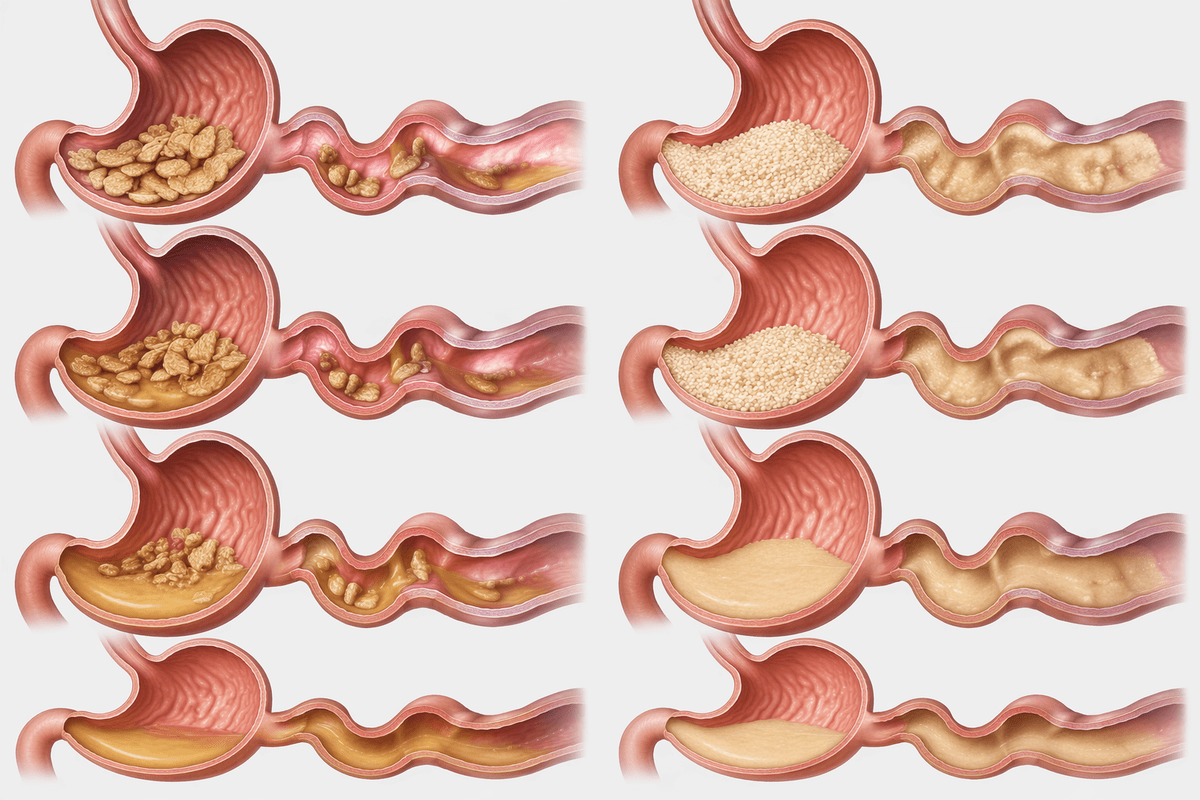
You might notice it first as a “heavy” feeling that doesn’t actually last—like the bowl sat in your stomach, but your appetite still shows up on schedule. That’s often where fiber type matters more than the fiber number on the label. Some cereals add isolated fibers that thicken in liquid and can feel filling at first, while others rely on the fiber that comes packaged inside the grain itself.
Fiber that’s part of intact oats, shredded wheat, bran, or legume-based pieces tends to slow the way the cereal hydrates and breaks apart. That can stretch out digestion and make fullness arrive more steadily, instead of peaking right after you eat. In contrast, very finely processed cereal can move through fast even when “fiber” is listed, because the overall structure still falls apart quickly.
Comfort can shift too. A sudden jump in certain added fibers may leave you feeling gassy or tight, which can be confusing—sometimes it reads as fullness, and sometimes it just feels distracting while hunger returns anyway.
Protein content separates snacks from real breakfasts
It’s easy to blame the milk choice when you’re hungry again—“Maybe I should’ve used whole milk,” or “Maybe I didn’t pour enough.” But if the cereal itself is mostly starch with little protein, the bowl can behave more like a light snack than a true breakfast, even when it looks substantial.
Protein tends to slow the pace of digestion and supports the quieter “I’m good for now” signals that show up later, not just right after the last bite. Many common cereals land around 2–3 grams of protein per serving, which doesn’t give your body much to work with once the grain portion has broken down. That’s when mid‑morning hunger can feel sudden and a little urgent, especially if the rest of the bowl is refined.
More satisfying cereals often start closer to 6–10 grams of protein per serving—or they’re eaten in a way that gets you there. The labels can make this hard to see: serving sizes vary, and a “high‑protein” callout can still add up to less than you expect once you pour your usual bowl.
Sugar and refinement drive quick hunger rebounds
Sometimes it shows up as a strangely specific craving—something sweet, something crunchy—despite the fact that you ate not that long ago. You might even replay the bowl in your head and think, “That was plenty,” while your body acts like it barely counted. When cereal is both refined and sweetened, it can leave you with that “already looking for the next thing” feeling before the morning has really started.
Added sugar isn’t just about calories; it can change the tempo of the whole meal. A cereal made from finely milled flour or puffed bits tends to hydrate fast, break down quickly, and move glucose into the bloodstream in a hurry. That quick rise can feel like alertness at first, but the drop that follows may come with jittery hunger, fogginess, or a sharper pull toward snacks—especially if the bowl didn’t include much protein or grain structure to slow things down.
Two cereals can look similar on the front, yet one gets most of its carbs from more intact grains while the other is mostly refined starch plus sweeteners. If your hunger reliably “rebounds” around the same mid‑morning window, it’s often less about willpower and more about how quickly that specific cereal finishes its job.
Meal add-ins can outweigh the cereal itself
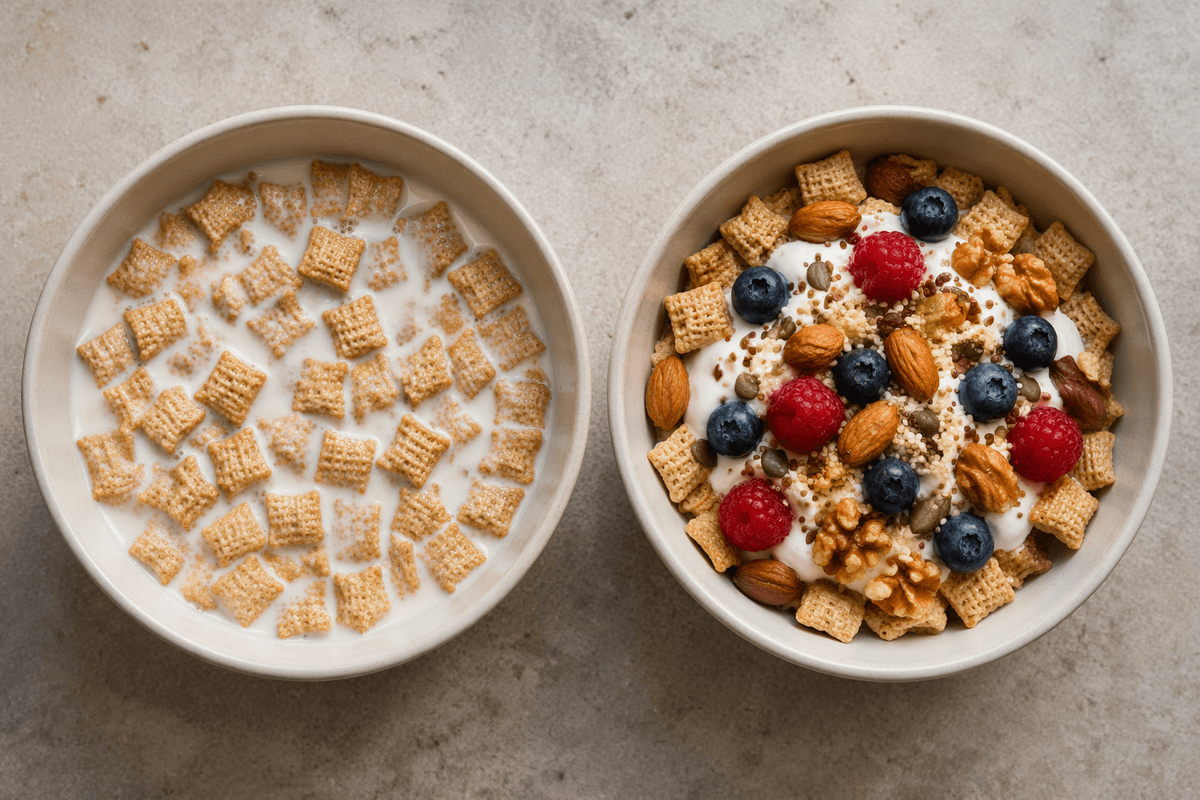
You notice it when the spoon hits the bottom of the bowl: the cereal is gone, but the milk tastes sweet, or there’s a faint chalky thickness from something that dissolved. It can feel like you “ate cereal,” yet what your body remembers an hour later is mostly liquid carbs. That’s why two people can eat the same cereal and have totally different mornings—one used it as a base for a more complete meal, the other ate it almost standalone.
Add-ins change the speed and the signal. Milk, yogurt, or kefir add protein and fat that tend to slow how quickly the meal leaves the stomach, so fullness often arrives later and lasts longer. Nuts, nut butter, seeds, and even a small handful of higher-protein granola can do something similar by adding chew and energy density. Fruit can help too, but it’s inconsistent: berries or a chopped apple often behave differently than a large pour of juice-like dried fruit, and “more” isn’t always better if it pushes the bowl back toward a quick sugar hit.
If the cereal is very refined and sweet, you may end up using a lot of extras just to feel steady—and then the bowl can swing from “not enough” to surprisingly heavy without actually feeling more settled. In some weeks, the most useful clue is simple: whether the satisfying part of breakfast seems to come from the cereal, or from everything you had to build around it.
High-fiber swaps can backfire with bloating
It often happens the first week you “upgrade” your cereal: the bowl seems more wholesome, but your waistband feels a little tighter by late morning. You might even assume it’s a good sign—“the fiber is working”—until the feeling turns into pressure, gassiness, or a dull crampy kind of fullness that doesn’t match your actual hunger.
One reason is speed. If you jump from a low‑fiber cereal to a very high‑fiber one overnight, your gut may not be ready for the extra bulk and fermentation. Some fibers pull in water and swell quickly, while others are more fermentable and can produce more gas as bacteria break them down. That can make you feel “full” in a physical way, but it’s not always the steadier satisfaction that keeps cravings quiet.
A cereal can be high in fiber because it’s mostly bran or added isolated fibers, yet still be fairly refined and quick to digest. In that case, you can get both: stomach discomfort from the fiber hit and a mid‑morning appetite rebound from the underlying starch.
Reading cereal labels without getting misled
You might glance at the front of the box and think you’ve already done the work—“whole grain,” “high fiber,” “made with oats”—then wonder why you’re still hunting for something at 10:30. The label can be technically true and still not match how the cereal behaves in your bowl, especially if the serving size is smaller than what you pour.
On the Nutrition Facts, it helps to read it like a timing clue: fiber and protein usually predict how long the meal has “legs,” while added sugars tend to speed the arc. A cereal with a few grams of fiber but only 2–3 grams of protein can still fade fast, and a “good source of fiber” can come from added isolated fibers that don’t slow digestion the same way intact grains do.
Then check the ingredients for structure, not slogans. If the first items are whole oats, shredded wheat, bran, or other recognizable grains, the cereal often breaks down more slowly than one led by flours, starches, and multiple sweeteners. If your hunger rebound is consistent, the label is usually explaining it—you just have to read past the front.