Safety isn’t more gear, it’s smarter gear
I paused at the trailhead kiosk at 7:12 a.m., phone at 18%, watching a line of day-hikers funnel past the only map. The route looked clean on the screen—one tidy loop—but the posted notice about a washed-out footbridge made my “easy miles” plan feel suddenly theoretical. I could either gamble on the detour or burn daylight walking back to the visitor center for an update.
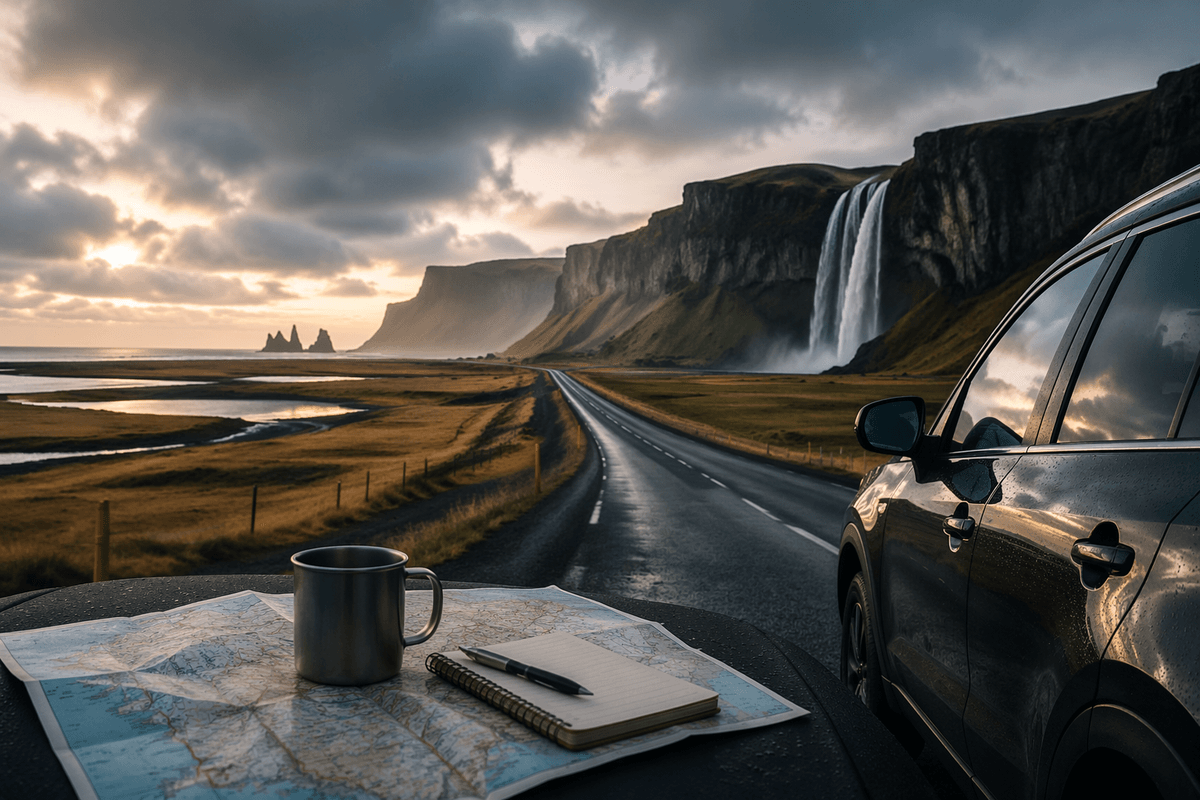
That’s where “safety” stopped meaning more stuff and started meaning smarter choices: information, timing, and a few tools that actually change outcomes. A paper map and a downloaded offline map weigh almost nothing, but they’re useless if you never check where the reroute begins. The trade-off is mental, not physical—spending five minutes confirming the alternate crossing versus hauling an extra pound of “just in case” gear you won’t deploy under stress. If you’re solo, that check matters more; there’s no group consensus to catch a bad assumption.
Weight still counts, but redundancy should be selective. Two light sources beat one fancy headlamp if you’re the type to push a late start; an extra battery bank beats a second gadget you won’t charge. Weather is the quiet limiter: a clear morning can turn into wind that slows you down and makes small mistakes expensive. If you’re shopping last-minute, prioritize items that buy time—navigation, light, and a reliable way to stay warm—then leave the “cool” add-ons for trips where you’re not racing sunset.
The non-negotiables: shelter, sleep, warmth
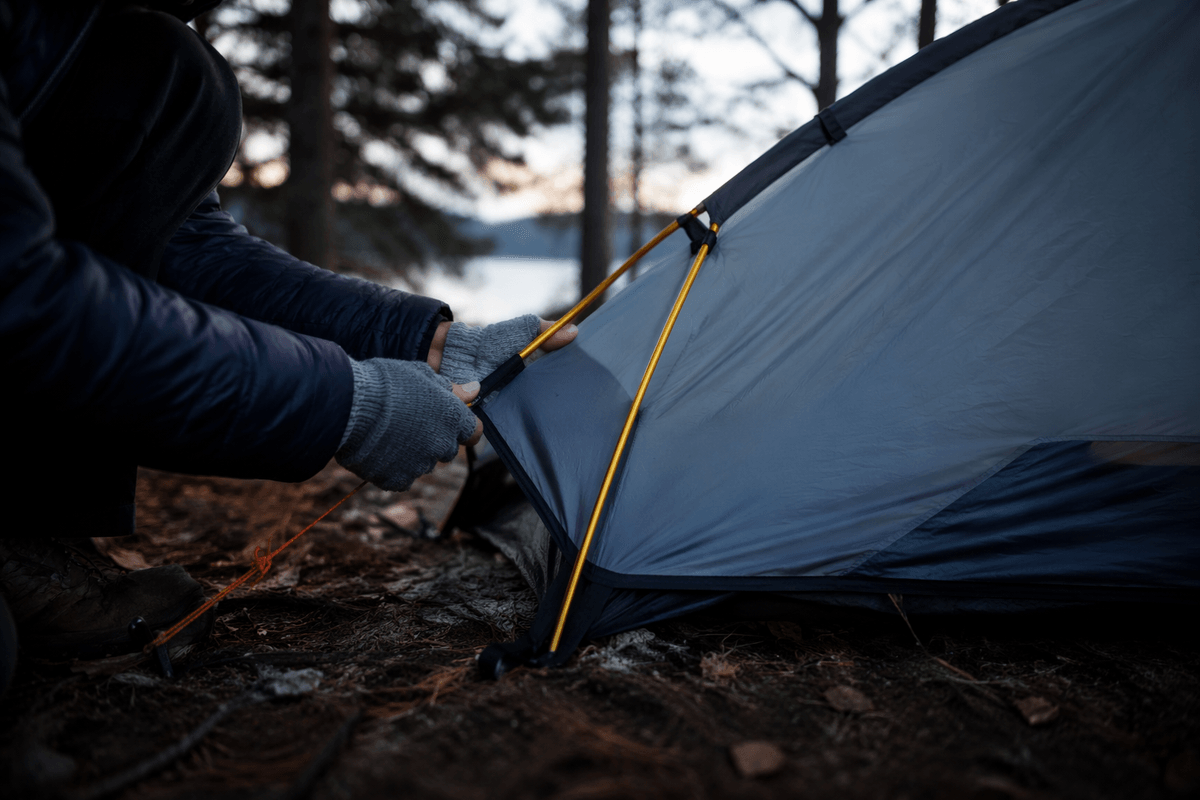
At 4:38 p.m. I watched the wind pick up in the trees and realized my “I’ll find a perfect campsite” plan had about twenty minutes of daylight left. The first flat spot was exposed, the next one was a half-mile farther, and my legs were already doing that shaky end-of-day math. That’s the moment when shelter and sleep stop being comfort items and start being time buffers.
For a 7–10 day solo trip, I treat shelter, sleep insulation, and ground insulation as a single system: if one piece is weak, the others have to work harder. A lightweight tent buys you bug protection and fuss-free pitching when you’re tired; a tarp can be lighter and cheaper, but it demands better site selection and faster knots when weather moves in. If you’re last-minute shopping, pick the option you can set up in the dark without thinking—your future self will pay for complexity with cold fingers.
Sleep warmth is where marketing gets loud and safety gets quiet. A 20°F-rated bag isn’t “warmer” if you’re on a thin pad bleeding heat into the ground, and an ultralight quilt only works if you’ll actually manage drafts at 2 a.m. I’d rather carry a slightly heavier pad with a higher R-value than chase a lighter bag, because the pad is the limiter on cold ground. Add one dependable warm layer you can hike in slowly (not just a puffy you baby), and you’ve got a setup that works when the day runs long and the weather doesn’t cooperate.
Water and food systems that won’t fail
I was crouched at a silty creek at 2:11 p.m., watching my squeeze filter slow to a drip while mosquitoes found the only patch of exposed skin on my wrist. The map showed “seasonal water” ahead, but in August that can mean a muddy trickle, not a refill point. Standing there, I felt the difference between a water plan that’s lightweight on paper and one that keeps you moving when you’re tired and a little impatient.
For most 7–10 day routes, I treat water like a two-layer system: one primary filter you’ll actually use, plus a backup that covers the failure modes. A squeeze filter with a 2–3L dirty bag is fast and mid-budget, but it hates freezing nights and clogs in glacial/sandy sources; a few chlorine dioxide tablets weigh almost nothing and bail you out if the filter cracks, gets lost, or turns into a science project. Carry capacity is the trade-off: two 1L bottles work when water is frequent; add a collapsible bladder when the next reliable source is “maybe” and the day is hot.
Food failure is usually a stove-and-timing problem, not a calorie problem. A small canister stove is forgiving when you roll into camp late, but only if you pack one reliable lighter plus a backup ignition (tiny matches in a bag) and enough fuel for slower boils in wind. Cold-soaking saves weight and fuss, yet it’s a poor fit if cold dinners tank your morale on day three. I like one extra no-cook meal and a hard snack buffer—because the safest plan is the one that still works when dinner is delayed.
Navigation, power, and emergency readiness
At 6:27 a.m. I stared at the trail junction where the sign said “Ridge Route,” but my offline map showed the line drifting left into what looked like a faint creek bed. The phone GPS dot lagged, then snapped forward, and for a few seconds I had three “truths” and one narrowing window before the heat kicked up. Standing there, I’d trade a slick UI for a compass bearing and a map I could trust when the screen started guessing.
My navigation baseline for solo trips is simple: offline maps downloaded, phone in airplane mode, and a paper map plus a real compass you know how to use. A dedicated GPS can be more robust than a phone in wet/cold conditions, but it’s another device to charge and another menu to fumble when you’re tired. If you’re last-minute shopping, don’t buy complexity—buy reliability: one nav app you’ve tested, one map that matches the current reroutes, and the muscle memory to orient it fast.
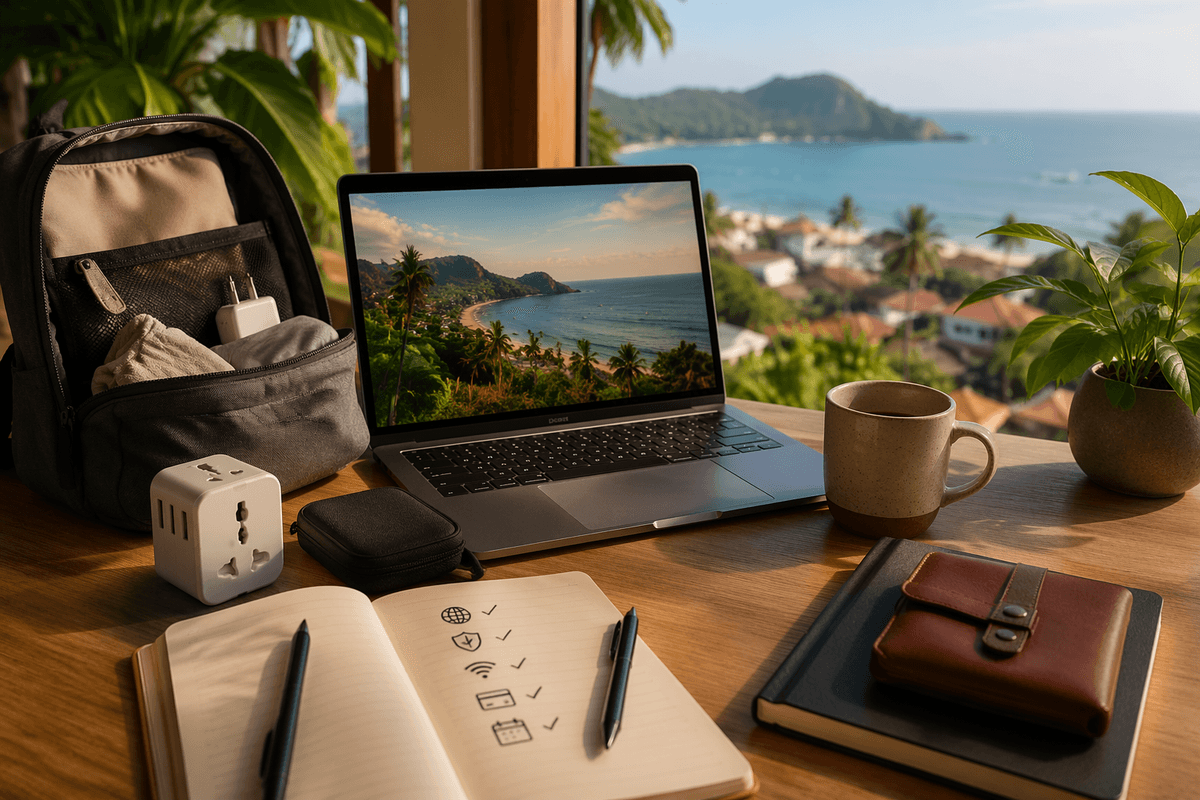
Power is the quiet failure point. A 10,000 mAh bank is usually the sweet spot for 7–10 days if you’re disciplined (airplane mode, low brightness, no doomscrolling at camp), while 20,000 mAh is for people who film a lot or can’t stop checking the dot. Emergency readiness is similar: a whistle and headlamp are weightless insurance; a satellite messenger/PLB is expensive, but it’s the only tool that can change the outcome when you’re immobilized and out of cell range—worth it for remote routes, optional for crowded corridors if your risk tolerance is low.
First aid, hygiene, and foot protection
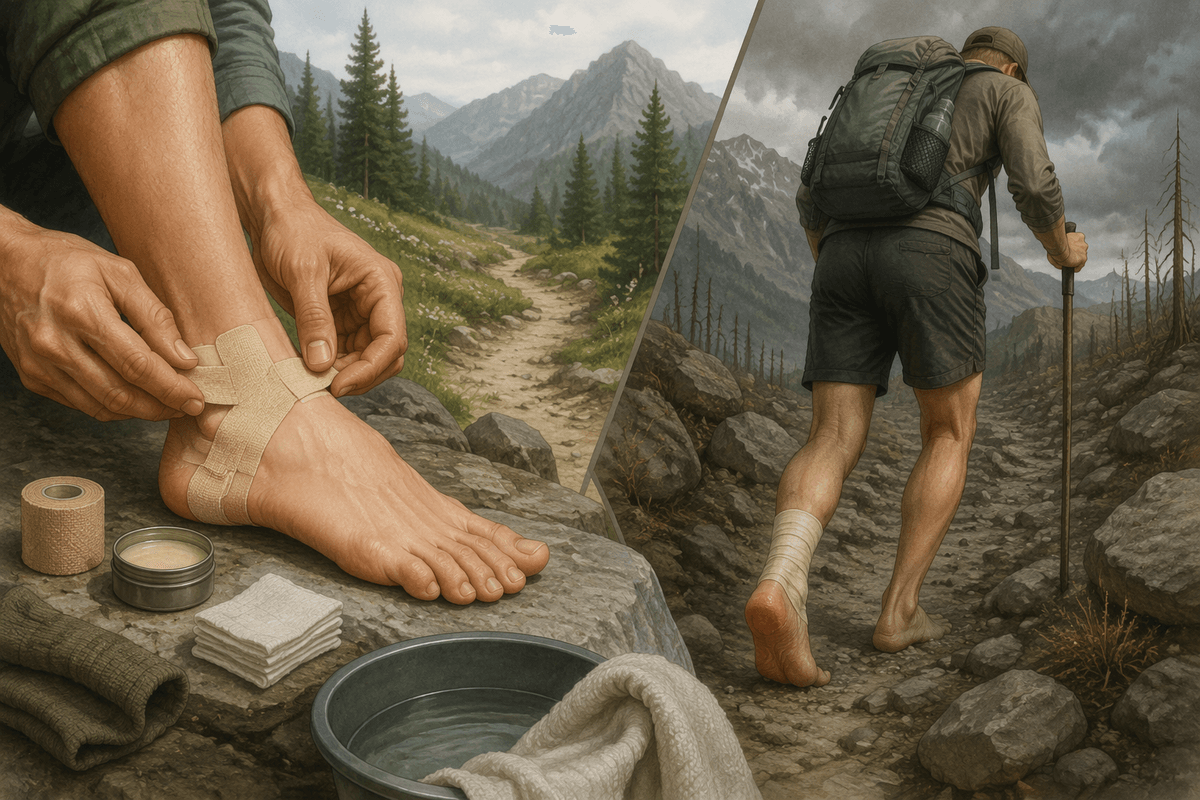
I noticed it at 9:03 a.m.—a hot spot on the outside of my right heel, the kind you can feel through your sock before you can really see it. I stopped anyway, pack half-off, because waiting “until the next break” is how a two-minute fix turns into a slow limp. You treat feet early or you pay for it all day.
My first-aid priority is outcomes, not a pharmacy. For most mid-budget solo trips, I’d rather carry blister care (Leukotape or moleskin plus a small needle) than a bulky kit stuffed with duplicates; the trade-off is you’re betting on prevention over treating a big mess later. Add a few assorted bandages, one gauze pad, a short wrap of athletic tape, a couple ibuprofen, and antihistamine if you react to bites—small, cheap, and actually used. If you’re the type to push miles late, include an elastic wrap; it’s not “ultralight,” but it’s the difference between walking out and waiting for help when you tweak an ankle.
Hygiene is where weight fights morale. Hand sanitizer and a tiny soap sheet setup work better than wipes in windy camps (wipes get rationed, then ignored), while a toothbrush + a few feet of floss quietly prevents day-five misery. Foot protection is the hinge: two sock pairs (one to hike, one to sleep), breathable shoes that dry, and a habit of airing feet at lunch. If you only upgrade one thing last-minute, make it your blister system—then decide, honestly, if your route and risk tolerance justify the extra wrap and meds.
My safest minimalist kit for most trips
I hesitated in my living room with the pack half-zipped, a receipt for “emergency” extras still warm in my pocket, and a scale reading 27.4 lb before food and water. It wasn’t that any one item was ridiculous; it was the pile of duplicates that all promised the same comfort. I set a timer for ten minutes and forced myself to keep only what would still matter if I were cold, lost, or moving slower than planned.
My safest minimalist kit looks boring on purpose: shelter you can pitch tired (simple freestanding tent or a tarp only if you’re practiced), a sleep system that matches the ground (pad with a real R-value, then bag/quilt), and one dependable warmth layer you’ll actually hike in when wind steals pace. Water is one primary filter plus chlorine dioxide tabs, with capacity that fits the longest dry stretch—not the average one. For food, I’d rather skip “luxury” cookware than skip a backup ignition and one no-cook meal that works when you roll into camp late.
The safety “extras” I keep are small, not many: headlamp plus a tiny backup light, paper map + compass even if you love your phone, and a 10,000 mAh bank if you’re disciplined with airplane mode. First aid stays foot-forward—Leukotape, a needle, a few meds, and (if you’re solo and far) an elastic wrap despite the weight penalty. If you’re choosing one expensive upgrade, a satellite messenger is the only thing here that can replace luck; if that feels like overkill, pick routes where other hikers are your backup and be honest about your pace.